

.jpg.e72237624df7c7661de9dab07f0b55d2.jpg)

நன்னிச் சோழன்
-
Joined
-
Last visited
Everything posted by நன்னிச் சோழன்
-
 வணக்கம்.
 -
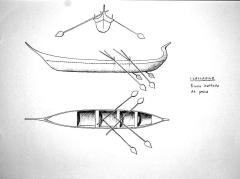
From the album: Different types of boats used by Tamils during british era
-
This study examines the design and use of ancient Tamil boats across the wider Tamilakam region, including the Chera territories of present-day Kerala, which formed an integral part of ancient Tamil cultural and political geography. Although the post-1500 CE period lies beyond the classical era of Tamilakam, the maritime craft of Kerala during this time represent an evolved form of the earlier Tamil maritime traditions that had flourished under the Chera rulers. Therefore, they are included in this study to trace the continuity and transformation of Tamil maritime technology from antiquity into the early modern period. Images inside this were taken from various sources. Image credits to the respective owners. Document: shirini
-
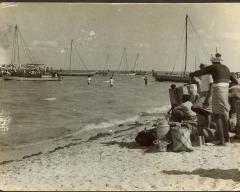
Lakshadweep - Naaluvalikkunnathu
-
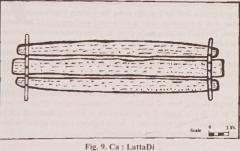 chalathadi, Tradional Indian ship building memories, history, technology by Rajamanickam, G. Victor.jpg
-
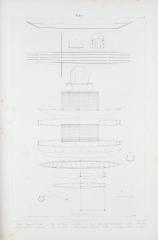 Boats common to Sinhalese and Tamils:- Top to Bottom: Pattai, Sangkadam, Vallam, Pilaavu
-
-BYRAFAELMONLENPainteroftheNavalMuseumbetween1870-1900source-MilitaryLibraryofBarcelona.jpg.9b2aa5e7a24f944200f77f267418b1b3.jpg) HISTORY OF NAVIGATION (PART 7) - BY RAFAEL MONLEÓN, Painter of the Naval Museum, between 1870-1900, source- Military Library of Barcelona.jpg
HISTORY OF NAVIGATION (PART 7) - BY RAFAEL MONLEÓN, Painter of the Naval Museum, between 1870-1900, source- Military Library of Barcelona.jpg
-
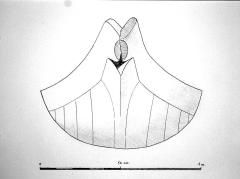 no data.jpg
-
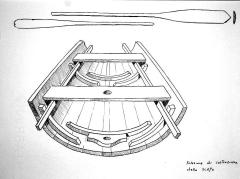 hull construction.jpg
-
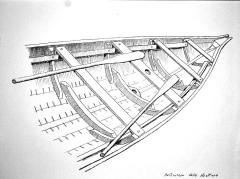 Detail of the structure.jpg
-
 Ceylon - canoedinghy according to an original preserved in Trieste, Italy.jpg
-
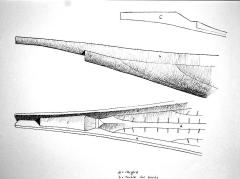 a.keel b.side plank c.clamp.jpg
-
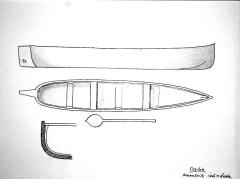 ceylon 2.jpg
-
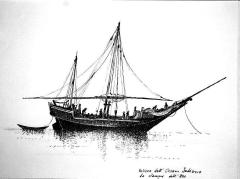 Sailing ship of the Indian Ocean from a 19th-century print
-
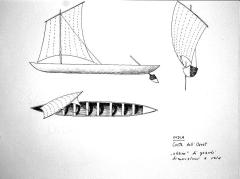 India - West Coast - Large sailing odam.jpg
-
 19th centuary Pattai - A sewn-plank outrigger fishing vessel from Marawila, Puttalam, Ceylon. | According to Lt. Cdr (Rtd) Somasiri Devendra, this was common to Tamils and Sinhalese (Originated)
-
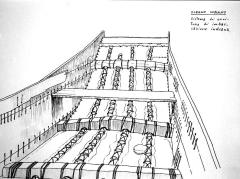 19th centuary - A sewn-plank outrigger fishing vessel - Pattai - from Marawila, Puttalam, Ceylon
-
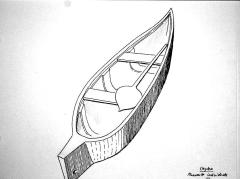 Ceylon vallam
-
1906.jpg.b8d11261591c83ecf114b01a7c65ea7e.jpg) THE SAILING BOAT A TREATISE ON SAILING BOATS AND SMALL YACHTS THEIR VARIETIES OF TYPE, SAILS, RIG, fcc (3), 1906.jpg
THE SAILING BOAT A TREATISE ON SAILING BOATS AND SMALL YACHTS THEIR VARIETIES OF TYPE, SAILS, RIG, fcc (3), 1906.jpg
-
1906.jpg.0e5d5c27cdae2a1546675177f86a7f32.jpg) THE SAILING BOAT A TREATISE ON SAILING BOATS AND SMALL YACHTS THEIR VARIETIES OF TYPE, SAILS, RIG, fcc (2), 1906.jpg
THE SAILING BOAT A TREATISE ON SAILING BOATS AND SMALL YACHTS THEIR VARIETIES OF TYPE, SAILS, RIG, fcc (2), 1906.jpg
-
1906.jpg.74ac2c4af6cae4dfbe5277bfd72f8c86.jpg) THE SAILING BOAT A TREATISE ON SAILING BOATS AND SMALL YACHTS THEIR VARIETIES OF TYPE, SAILS, RIG, fcc (1), 1906.jpg
THE SAILING BOAT A TREATISE ON SAILING BOATS AND SMALL YACHTS THEIR VARIETIES OF TYPE, SAILS, RIG, fcc (1), 1906.jpg
-
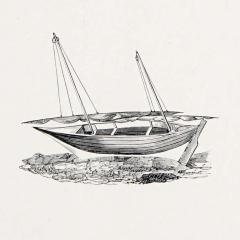 a-pattamar-f80aae.jpg
-
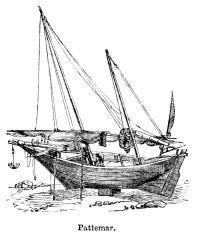 Engraving depicting a patamar, a vessel resembling a grab, used in the coasting trade of Bombay and Ceylon. 1850.jpg
-
-
Authored and Released by: Nane Chozhan (நன்னிச் சோழன்) Introduction: For decades, a popular theory has circulated in Indian maritime history identifying the Kolandiophonta — the "ships of great bulk" mentioned in the 1st-century Periplus of the Erythraean Sea—as the legendary vessels of the Chola dynasty. This narrative, championed by scholars like Prithwis Chandra Chakravarti and K.M. Panikkar, even led to the modern coinage of the term "Cholanthiyam" to provide a phonetic link to the dynasty. However, a deeper look into maritime ethnography reveals a more grounded reality. By revisiting the research of James Hornell from the 1918, we find that the mystery of the Kolandia is solved not through dynastic titles, but through the living language of the coast. Hornell’s analysis suggests these were not traditional deep-sea hulls, but one-sided outrigger vessels known to local Tamil fishermen as the Kullan. By tracing the linguistic evolution from "Kulla Thoni" to "Kolandia," we can move past modern mythology to rediscover the vessel that allowed ancient Tamil sailors to dominate the routes to Southeast Asia. Concentration: In this study, we will concentrate more on the interpretation of the terms Kolandiophonta by James Hornell. The Etymological Evolution: From "Kullan" to "Colandia" Throughout the mid-20th century, a specific interpretation of the Periplus of the Erythraean Sea (a 1st-century Greco-Roman maritime log) gained significant traction among Indian historians. Scholars like Prithwis Chandra Chakravarti (1930) and later K.M. Panikkar (1959) sought to identify the "Kolandiophonta"—described by ancient Greeks as massive vessels capable of reaching the Ganges and Southeast Asia. They interpreted it as “Colandia” and “Colondia” respectively. - Chakravarti, Prithwis Chandra. "Naval Warfare in Ancient India." The Indian Historical Quarterly, vol. 4, no. 4, Dec. 1930, pp. 658. - Panikkar, K. M. Geographical Factors in Indian History. Bharatiya Vidya Bhavan, 1959. This line of thought eventually led to the coinage of the term "Cholanthiyam" (T. சொழாந்தியம்) by certain researchers in Tamil Nadu, who described it as massive Chola dynastic vessels. However, critics argue this term lacks a historical or philological basis in ancient Tamil literature, suggesting it was an invented tradition to provide a phonetic link between the Chola Dynasty and the Greek texts. In contrast, the maritime ethnographer James Hornell, writing decades earlier in the seventh volume of the Memoirs of the Asiatic Society of Bengal (1918–1923), provided a more grounded, technical explanation. He asserted that the word was not a reference to a dynasty, but a Greek corruption of the Tamil word Kullan or Kulla in pages 215 & 216 of “PART IV.—THE CLASSES OF VESSELS EMPLOYED BY INDIANS IN ANCIENT DAYS PRIOR TO PORTUGUESE MARITIME DOMINANCE” of the above-mentioned book. The word Kulla Dhoni is also used by Casie Chitty in his book The Ceylon Gazetteer (1834, page: 44) to refer to the oruwa of the Galle area. Analysis: What We Can Understand from Hornell’s Findings 1. The Technical Reality of Ancient Navigation From Hornell’s research, we can conclude that the Kolandiophonta were likely specialized outrigger vessels rather than standard deep-hulled galleys. He also says that he has seen outrigger vessels from Ceylon in the south to Cuddalore and Kille (Cauveri River) on the East Coast (Page 218, J.Hornell). By linking the Greek description to the physical requirements of the Palk Strait, Hornell demonstrates that these ships were designed for a specific environment. The "prows at each end" mentioned by Pliny indicate a double-ended design, allowing the vessel to reverse pathin narrow, shallow channels without turning around—a hallmark of outrigger technology rather than the heavy, fixed-rudder ships often imagined in later medieval naval warfare. Hornell’s connection to the Tamil word Kullan—which refers to a large outrigger vessel—suggests that these ships were an advanced design used by the Tamils mariners, similar to the modern Sinhala traditional Yatra-oruwa (He has provided a drawing of this vessel). 2. The Linguistic Distortion of Maritime Terms Instead of looking for a "Lost Kingdom" or a mythical "Cholanthiyam," Hornell suggests we look at the living language of fishermen. Hornell’s work highlights how ancient Greek sailors likely phonetically adapted local Dravidian maritime terminology. He observes that while Kullan is the formal form, the shortened Kulla was common among the coastal labouring classes. So Kolandia is indeed a rendering of Kullan-thoni. It is far more likely that Greek merchants, interacting with local sailors and shipbuilders, would adopt the local technical name (Kulla-thoni or Kullan) rather than an imperial dynastic name. It shifts our understanding of ancient Tamil shipping from a purely imperial narrative to one of functional, indigenous engineering. It implies that the "great bulk" recorded by the Greeks wasn't necessarily a reference to massive tonnage like a modern ship, but rather the impressive scale of these specialized outrigger crafts that were capable of crossing the Bay of Bengal to reach Chryse (Southeast Asia). 3. Cross-Cultural Maritime Links He identifies a technological lineage between the 1st-century Kolandia and the 8th-century Javanese ships depicted in the Borobudur sculptures based on the outrigger types used in Java. The Missing Link: Visual Proof of the Tamils' Kulla Thoni These Kulla Thonis (also known as Yatra Oruwa in Sinhala) were not exclusive to one group; they were a shared maritime tradition used by both Tamil and Sinhalese sailors. Supplementing Hornell’s findings, Admiral Paris, in his book named VOILIERS ET PIROGUES DU MONDE AU DÉBUT DU XIXE SIÈCLE (1843), provided detailed drawings of these vessels, and confirmed that they were common along the Coromandel Coast of India and the shores of Ceylon. Image from the book VOILIERS ET PIROGUES DU MONDE AU DÉBUT DU XIXE SIÈCLE (1843) by Admiral Paris. A similar image to the one drawn by Admiral Paris has been acquired and is provided below. In this image, the author has mentioned it as a Yatra Oruwa, contradicting the source from which it was based. Drawing by Aldo Cherini from www.cherini.eu/etnografia/AS/index.html. In 1914, J.P. Lewis documented a vessel —which he identified as a "Calpentyn coaster"— similar to the Kulla Thoni through a distinct photograph taken in the coastal town of Katpitti (also known as Kalpitiya in Sinhala or Calpentyn in English). “Boats and canoes of Ceylon” in Times of Ceylon, Christmas Number, Colombo, 1914 via THE LOST SHIPS OF LANKA, Lt. Cmdr. Somasiri Devendra, 2013. An astonishing outriggered vessel's image was obtained from the Aldo Cherini, which resembles the Admiral Paris drawing. This image is a vital piece of historical evidence that bridges the gap between Admiral Paris' drawings and physical maritime reality. It depicts a vessel from the Coromandel Coast, similar to the one mentioned by Admiral Paris in 1843, which serves as the "missing link" in the Kolandiophonta debate. Drawing by Aldo Cherini from www.cherini.eu/etnografia/AS/index.html. Note: This vessel is named as Delta Doni (similar to Calpantyn Coaster, Tutucorin Coaster, Cochin Coaster naming culture of the Europeans) by the artist, without any specific names. This illustration clearly shows a vessel built using the ancient "sewn-plank" technique. Instead of iron nails, the planks are bound together with coconut fibre (coir) and caulked with resin. To the side of the main hull is a stout outrigger, connected by arched wooden booms. The outrigger provides the necessary buoyancy and leverage to carry large sails and heavy cargo across the open ocean to places like Malaysia (Chryse) and the Ganges, preventing the narrow hull from capsizing in high winds. In the illustration, the vessel is equipped with a large, powerful rudder suspended at the rear. It is designed to provide precise control for a vessel of "great bulk." This is the "Kulla" or "Kullan" that Hornell refers to, but without a rudder. Conclusion: To summarize, the idea that these ships were named "Cholanthiyam" is likely a modern myth created by later authors. While it sounds impressive to link them to the Chola kings, the historical evidence points in a different direction. James Hornell’s research shows that the name Kolandia actually comes from the Tamil word Kullan, which was the local name for a large outrigger boat. These ships were not just big; they were cleverly designed for the shallow and problematicwaters between India and Sri Lanka. Because they had prows at both ends, they could change direction without turning the whole boat around. This kept the outrigger stable and safe from the wind. This same technology helped Tamil sailors travel all the way to Malaysia and Indonesia. Instead of looking for a lost royal name, we should celebrate the practical skill of the ancient Tamil shipbuilders who created such unique and successful vessels. Moving forward, our understanding of Tamil maritime history should prioritize these technical truths over modern linguistic inventions or “pride”. Note: In his 1989 edition of The Periplus Maris Erythraei Text with Introduction, Translation, and Commentary (pages 89 and 230), Lionel Casson identifies kolandiophonta as a Greek transcription of the Chinese term K’un-lun po, referring to the large ships of the "K’un-lun" (Southeast Asian) mariners. Notably, Casson omitted James Hornell's "outrigger" theory entirely.
-
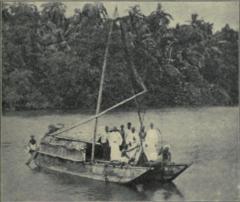
From the album: Different types of boats used by Tamils historically
-
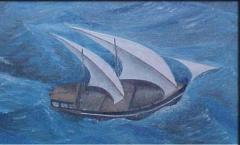
From the album: Different types of boats used by Tamils historically
-
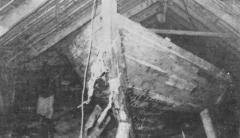
From the album: Different types of boats used by Tamils historically
-
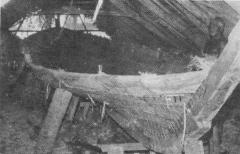
From the album: Different types of boats used by Tamils historically
-
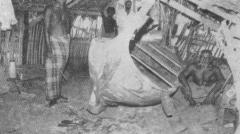
From the album: Different types of boats used by Tamils historically
-
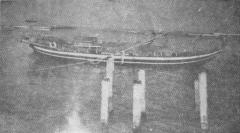
From the album: Different types of boats used by Tamils historically
-
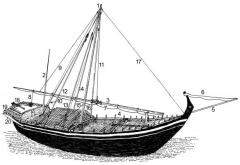
From the album: Different types of boats used by Tamils historically
-
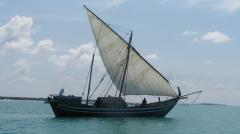
From the album: Different types of boats used by Tamils historically
-
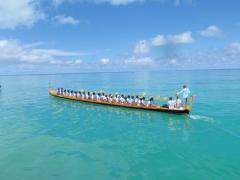
From the album: Different types of boats used by Tamils historically
-
From the album: Different types of boats used by Tamils historically
-
-
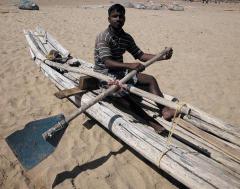
From the album: Different types of boats used by Tamils historically
-
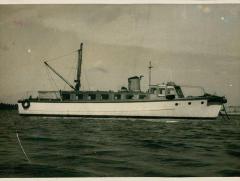
From the album: என்னுடைய ஆவணத்திற்கான படிமங்கள்
-
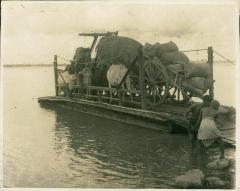
From the album: Different types of boats used by Tamils historically
-
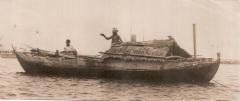
From the album: Different types of boats used by Tamils historically
-
-
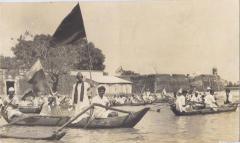
From the album: Different types of boats used by Tamils historically
-
அவனே செய்திருப்பான்...
-
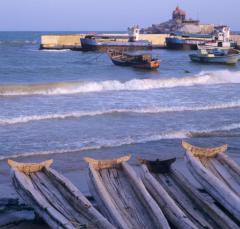
From the album: Different types of boats used by Tamils historically
-
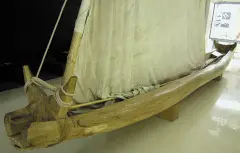
From the album: Different types of boats used by Tamils historically
-
From the album: என்னுடைய ஆவணத்திற்கான படிமங்கள்
.jpg.725ec4e6fdd9d4ec514b5a3cad08c6cc.jpg)